Feitian Dance
Introduction
Feitian (Flying Apsaras) Dance is a dance art form inspired by the murals of Mogao Caves in Dunhuang, Gansu province, celebrated for its profound historical and cultural significance. Rooted in the imagery of celestial beings depicted in these murals, the dance captures the ethereal beauty and spiritual essence of ancient Chinese artistry.
The origins of the Flying Apsaras Dance trace back to the Mogao Caves, a UNESCO World Heritage site known for its exquisite Buddhist murals and sculptures. Central to these artworks are the "flying apsaras", celestial figures often shown gliding through the air in graceful poses. These figures embody the confluence of diverse cultural influences, including Indian, Central Asian and Chinese traditions.
The apsaras concept originated in Indian Buddhist art, introduced to China via the Silk Road during the Tang Dynasty (618–907). Over time, these figures were adapted into the unique style of Dunhuang, reflecting the aesthetic and spiritual sensibilities of Chinese culture. The Flying Apsaras Dance is an artistic interpretation of these celestial beings, blending ancient motifs with traditional Chinese dance forms.
Dance Characteristics
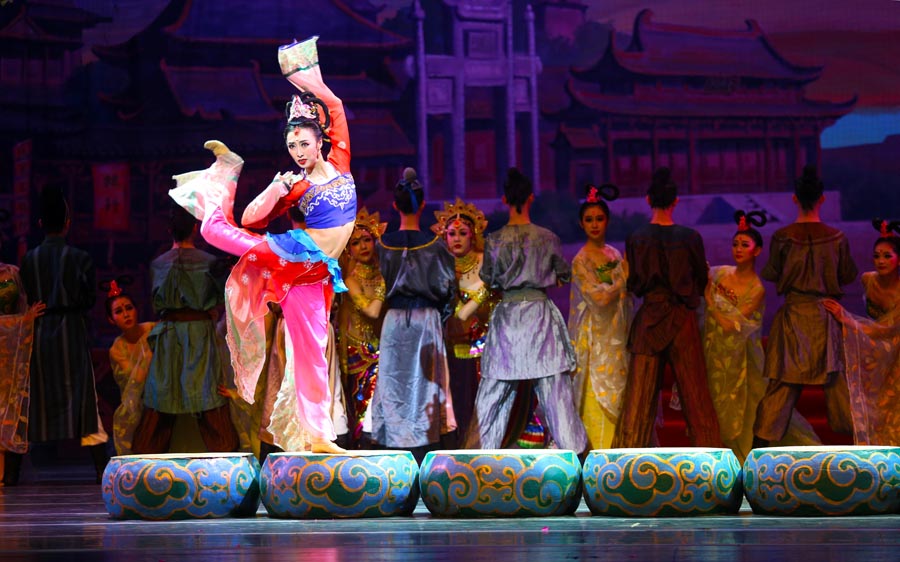
The Flying Apsaras Dance is renowned for its flowing movements, intricate arm gestures, and characteristic S-shaped body curves. A hallmark of the performance is the illusion of weightlessness: dancers often anchor one leg while tilting and rotating their bodies to create a sense of defying gravity. This ethereal quality mirrors the soaring grace of the apsaras in the Dunhuang murals.
Costumes and accessories play a pivotal role in evoking the mural imagery. Performers typically wear long, flowing silk ribbons and elaborately decorated garments, designed to mimic the apsaras' fluttering scarves and robes. The use of vibrant colors and intricate patterns further enhances the visual impact, drawing directly from the mural art.
Modern Stage Adaptations
In contemporary performances, the Flying Apsaras Dance has been revitalized through the integration of modern technology. Advanced stagecraft, including LED screens, dynamic lighting and rotating platforms, helps recreate the dreamlike ambiance of the Dunhuang murals. These innovations allow audiences to experience the surreal beauty of ancient art in a modern setting.
Additionally, choreographers often incorporate elements of classical Chinese dance and ballet to broaden the artistic vocabulary of the performance. Such adaptations have enabled the Flying Apsaras Dance to captivate audiences worldwide, becoming a symbol of China's rich cultural heritage.
Cultural Significance
The Flying Apsaras Dance holds immense cultural and artistic value as a bridge between ancient traditions and contemporary creativity. It serves as a living testament to the splendor of Chinese civilization and the cultural exchange facilitated by the Silk Road. The dance not only preserves the artistic legacy of the Mogao Caves but also reinterprets it for modern audiences, ensuring its relevance in the present day.
Recognized as a treasure of Chinese performing arts, the Flying Apsaras Dance embodies the harmony and diversity of cultures that have shaped China's history. It continues to inspire artists and audiences alike, symbolizing the timeless allure of beauty, spirituality and human connection.








